Ceiling Stains Away From the Opening
Water travels along deck flutes, purlins, and insulation joints before it drops. The stain marks where it landed, so we follow the path upslope to the seam, curb, or flashing that let it in.

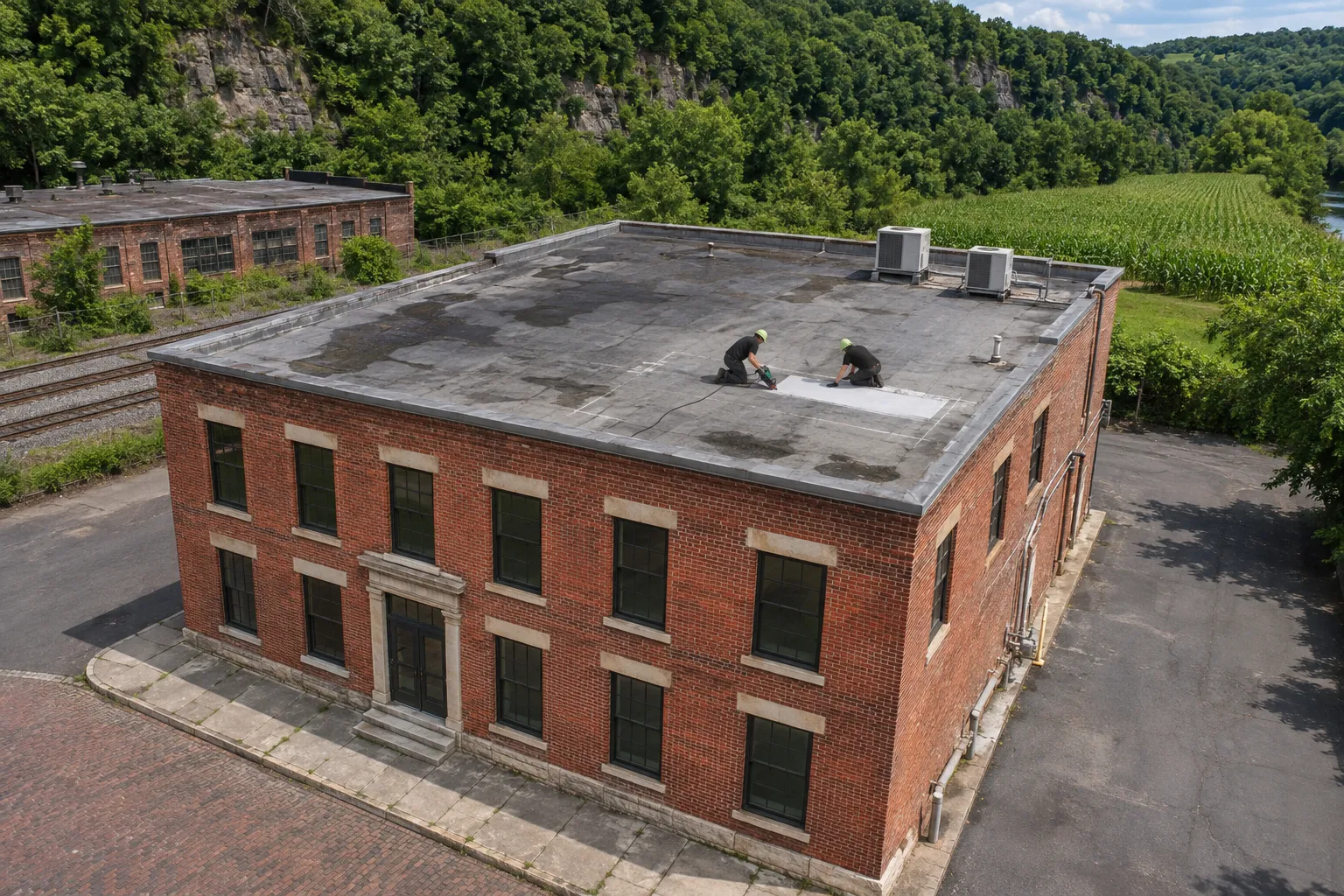
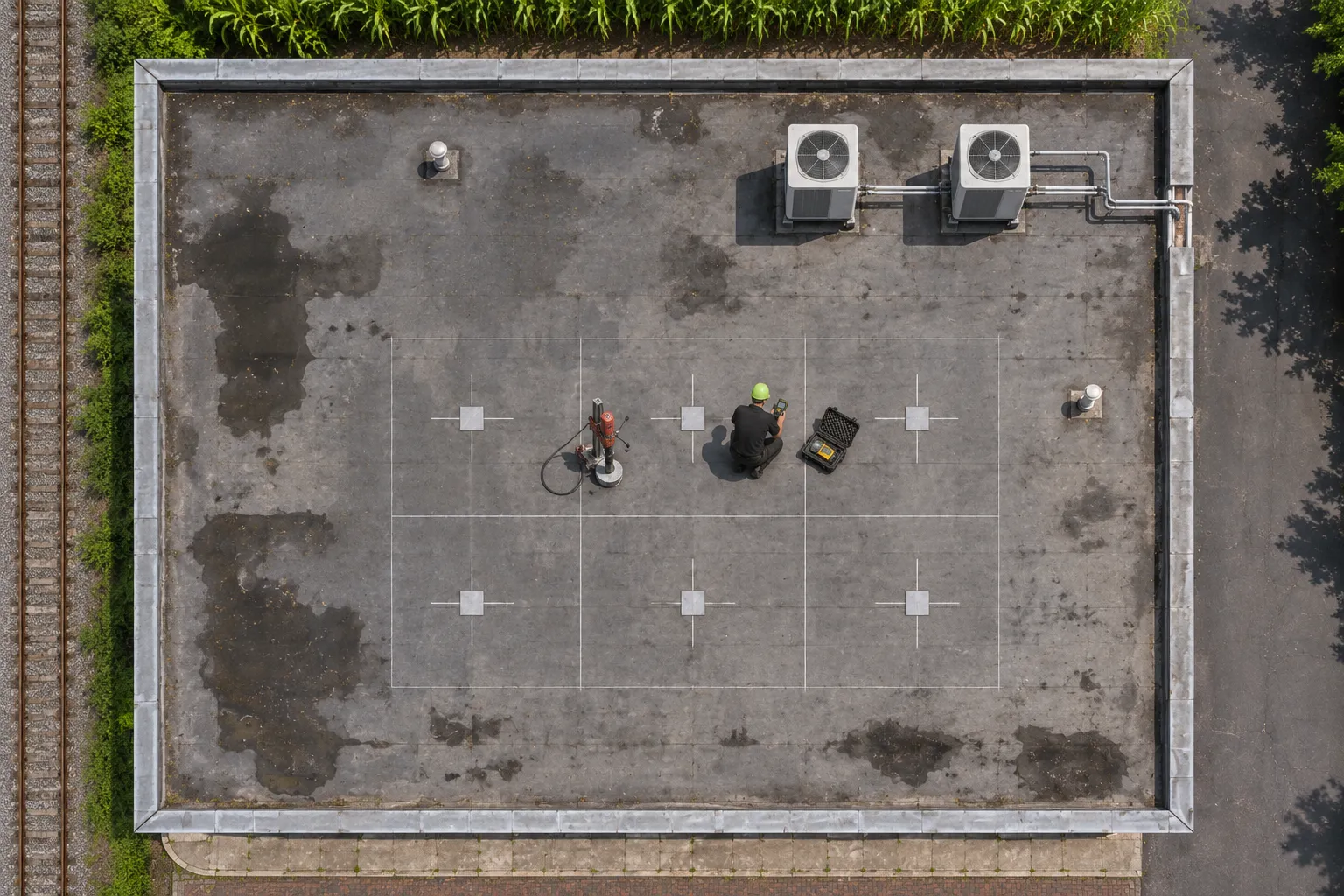
As an Easton commercial roof repair contractor, we trace leaks and repair flat, metal, and plant roofs on warehouses, packaging plants, and halls across Easton, PA.
Before an Easton commercial roof repair visit, compare what you see with these two lists. The left column means work can start soon; the right means something gets checked first.
Six conditions bring most building owners to us, each one tied to the part of the roof that needs work.
Water travels along deck flutes, purlins, and insulation joints before it drops. The stain marks where it landed, so we follow the path upslope to the seam, curb, or flashing that let it in.
Single-ply and modified roofs lose seam adhesion with age and movement. Edges curl, dirt collects in the gap, and every storm pushes more water under the lap until the run is rebuilt.
A dirt ring around a roof drain means water sits there for days. A raised clamping ring, crushed insulation, or a blocked strainer can cause it, and each needs its own fix.
Hail can split brittle membrane, crack flashing, and dent metal panels at their laps. Some damage leaks at once, while bruised spots open months later after a few freeze-thaw cycles.
On brick buildings, water can enter through coping joints or masonry above the roof line. A patch on the flat roof below misses that higher path, so we check the wall and its flashing together.
A small puncture can soak boards several feet around it. Core cuts show how far moisture reaches, which decides whether a patch holds or a section needs new insulation.
Four repair services cover the roofs we see most in Easton: flat membranes, metal panels, hidden leaks, and plant roofs with heavy equipment.
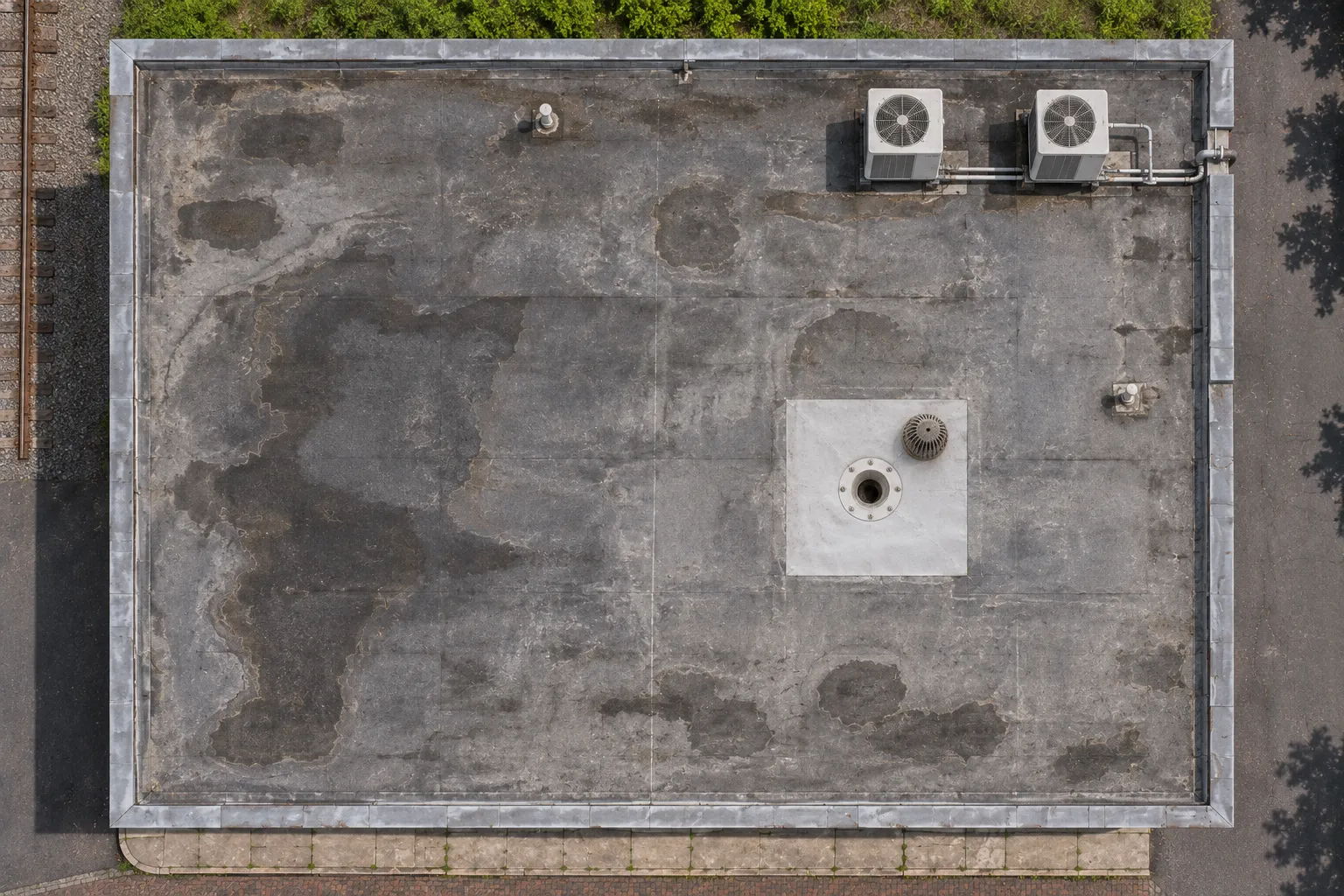
Membrane and built-up roofs on brick warehouses and plants, where seams, drains, and blisters let water in and the boards below need checking.
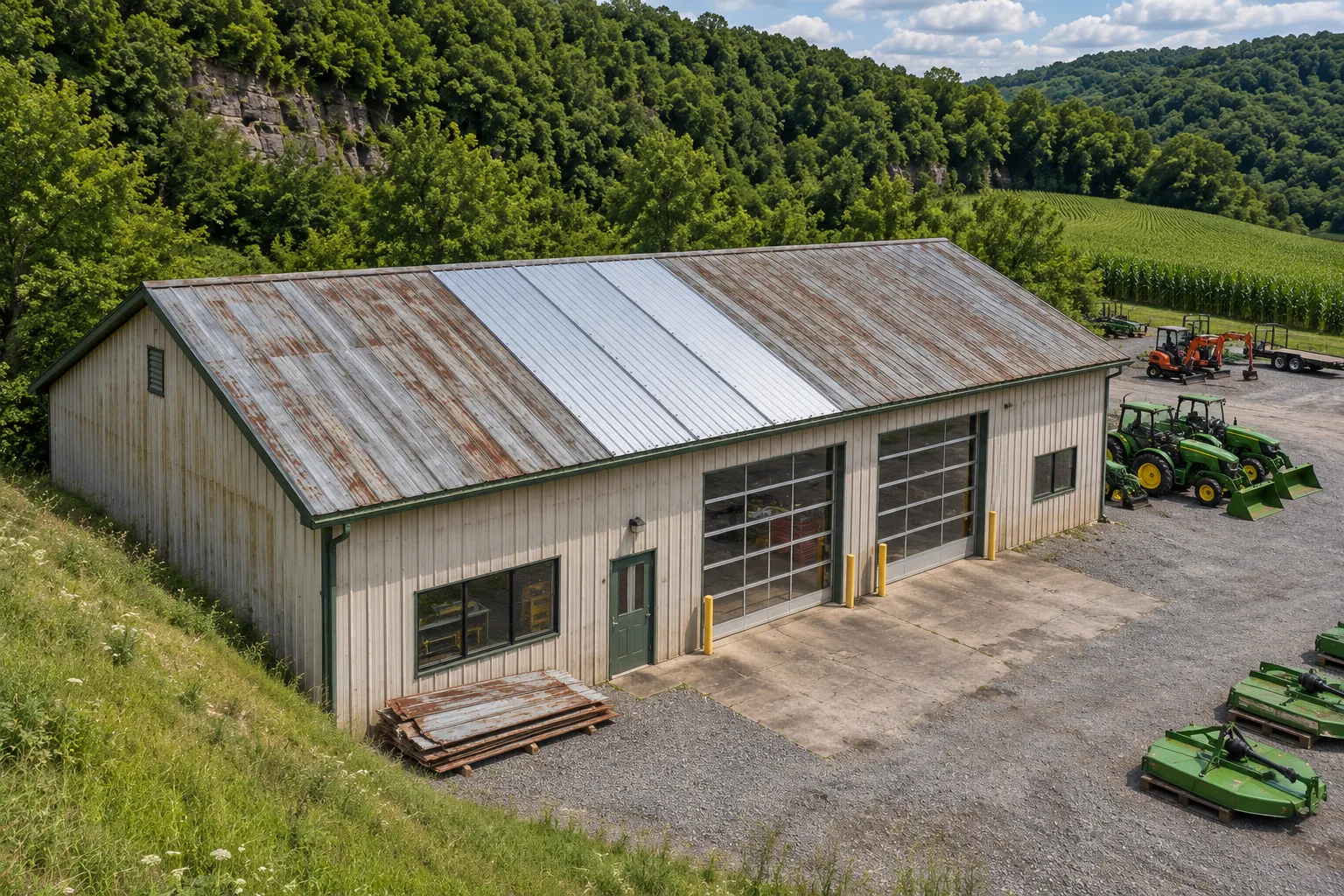
Ribbed and standing-seam roofs on shops and storage buildings, where fasteners, laps, and flashing at penetrations start to leak.
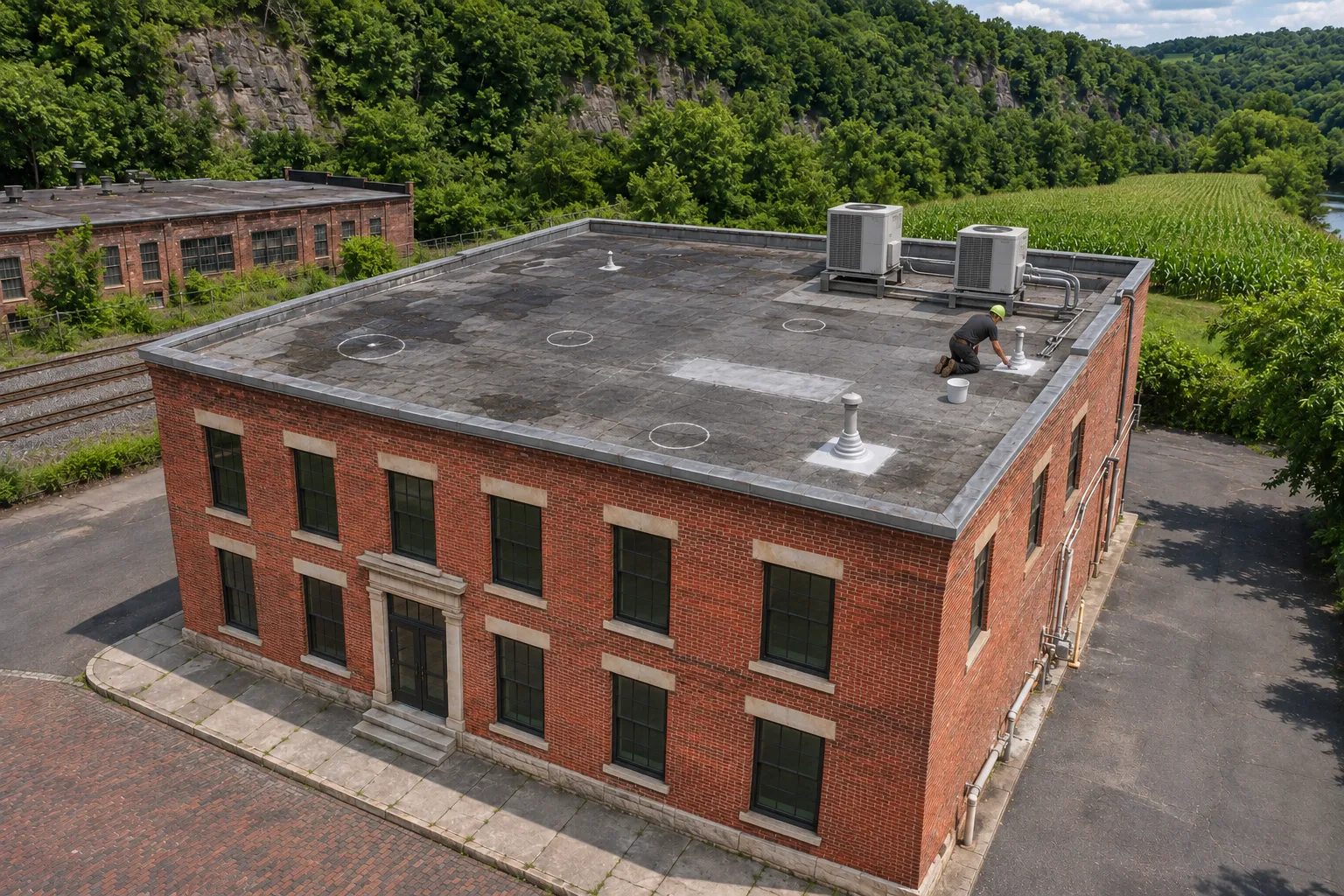
Leaks that show inside long before anyone finds the opening, including snowmelt drips and leaks at parapet walls.
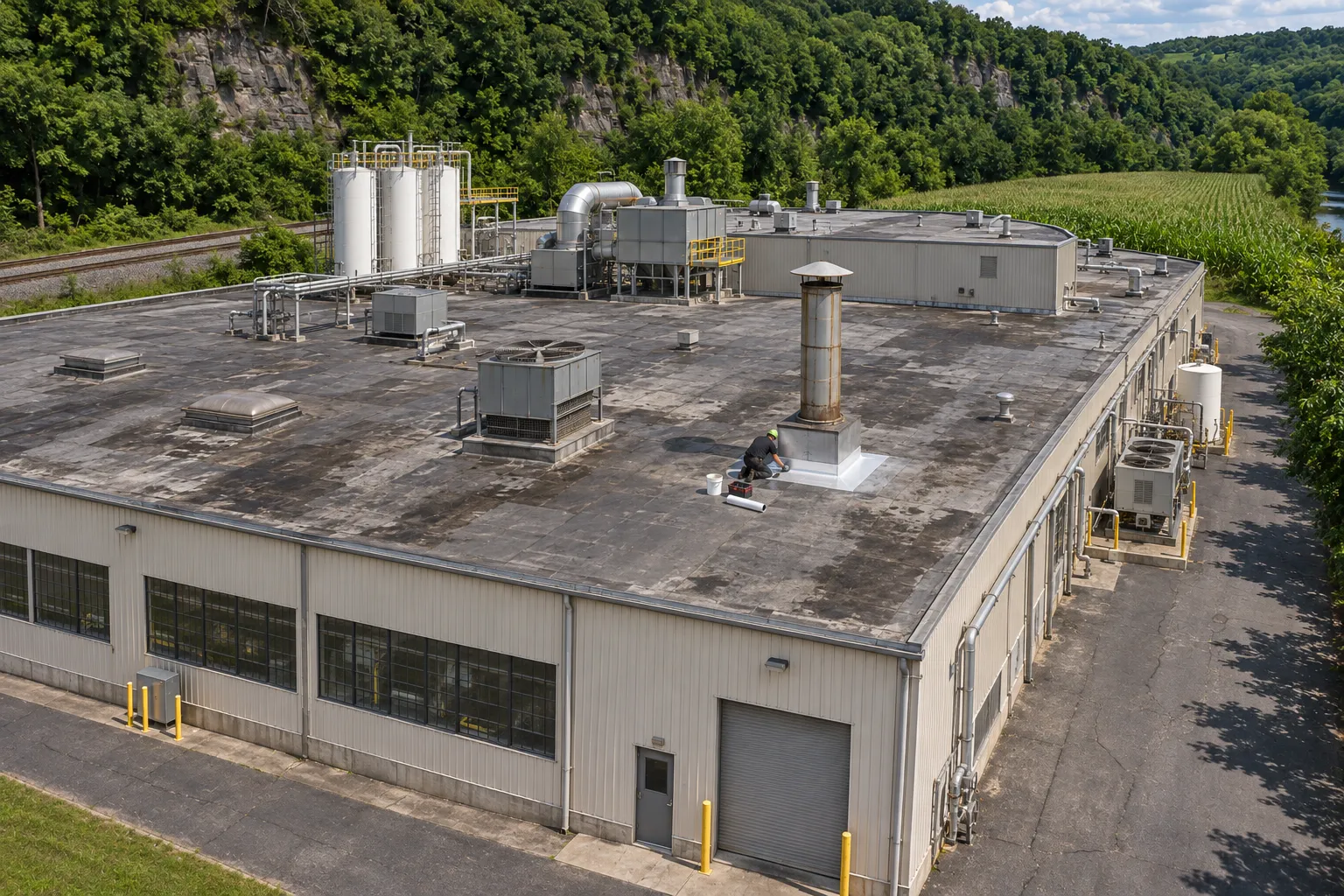
Plant roofs with stacks, fans, and ducts, where repairs are planned around the production floor below.
Call us with where the water lands and what sits above that spot. We will talk through protecting the area and getting the roof looked at.
Some steps happen on the roof and some inside or around the building. Both lanes matter to a lasting repair.
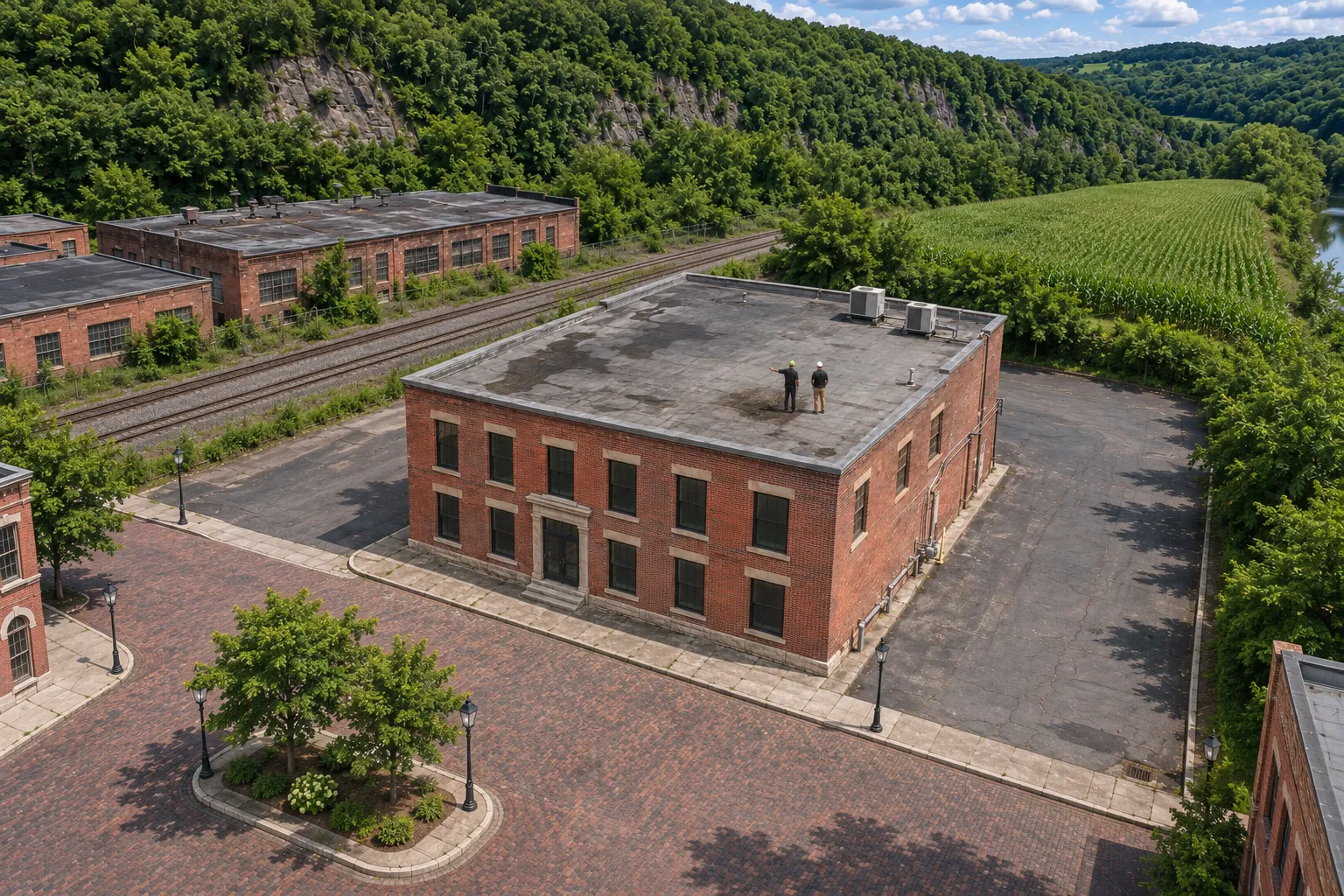
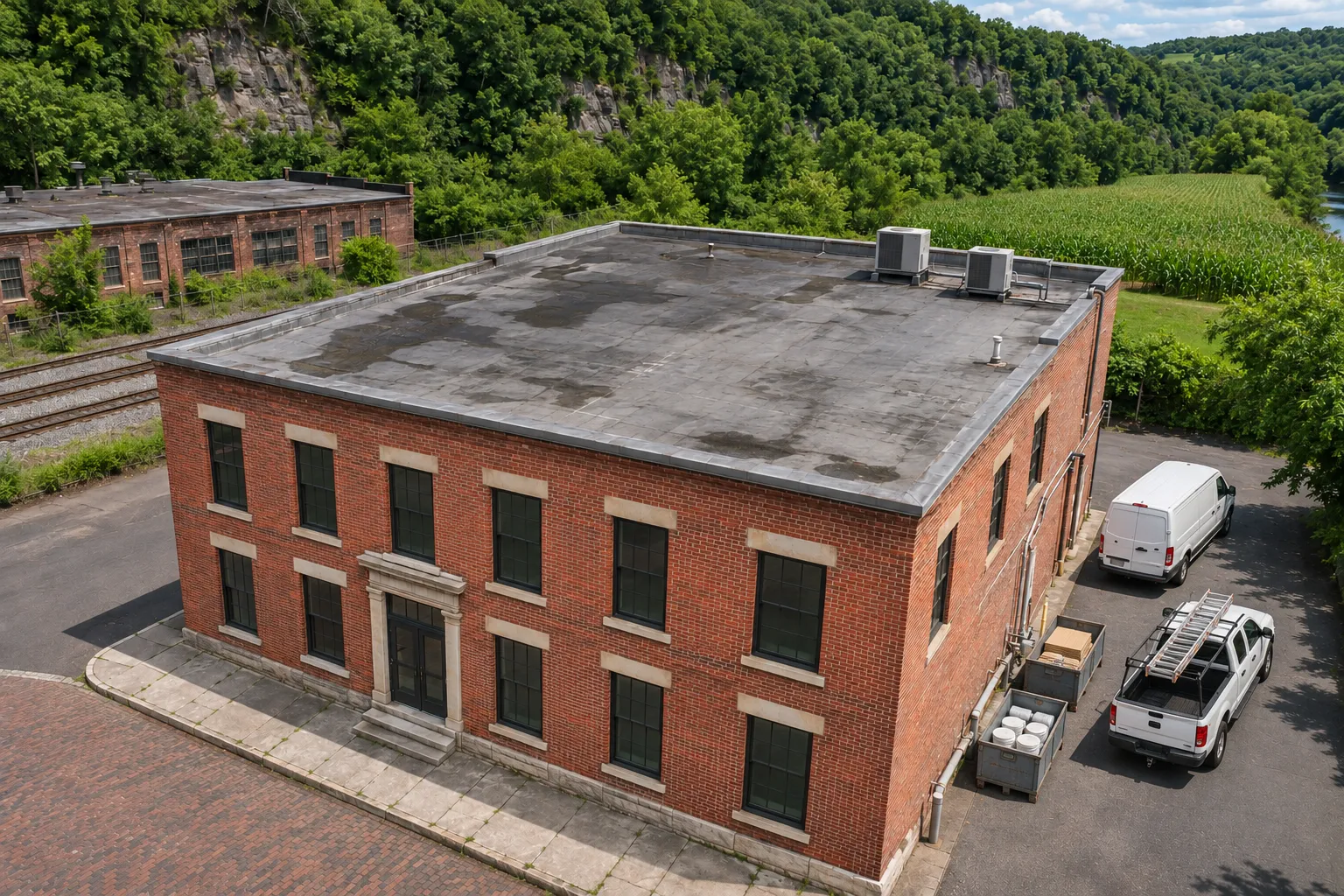
We note where water shows, when it started, and what weather or equipment work came before it, then mark the spots on a simple floor sketch.
Seams, curbs, drains, and wall flashing above the marks are checked by hand, and the path is followed upslope to the likely entry.
Small core cuts show whether insulation near the entry is wet and how far it spreads. Each core is sealed before we leave the roof.
Before any opening, we agree on covers, work hours, and access with whoever runs the space under the repair area.
Damaged material comes out, the repair ties into solid roofing, and seams and flashing are checked before the area is handed back.
A repair sized from inspection findings protects more than the spot that dripped.
Removing only the wet boards around a defect keeps the rest of the roof insulated and stops moisture from creeping under the membrane after the next storm. That is often the difference between a repair and a replacement a few years later.
Planning covers and work hours around a bay lets packing lines and offices keep running under most of the roof.
Photos, core results, and a marked roof plan help with a lease talk, an insurance claim, or a future budget.
Fixing the movement or flashing fault at a curb ends the cycle of fresh caulk over old caulk.
Not sure your building is in our area? Call us or send us a message. We repair commercial roofs in Easton and the five towns below.
Warehouse and distribution roofs where stains rarely sit under the opening.
Morrisville repairsMetal shop and storage roofs with seams that keep reopening.
East Stroudsburg repairsStorefront and food service roofs crowded with exhaust fans.
Wilson repairsOlder flat roofs whose drain leaks may start in the piping.
Clifton Heights repairsPlant and warehouse roofs with leaks that came back after repairs.
Folcroft repairsStraight-line distances, rounded, from town-center coordinates.
Short answers to what building owners in Easton ask before a repair visit.
It should name the roof system, the likely leak route, and the condition of the roofing around the damage before any material is picked. We compare interior reports with seams, drains, and equipment connections, explain the repair boundary we propose, and list any hidden conditions that still need opening up.
Start with what the hail actually broke: punctures, split flashing, cracked seams, or loosened connections. We also look for wind damage and, where the evidence allows, separate older wear from storm damage. The repair scope follows that functional damage. Insurance coverage is a separate question for your policy and the cause of loss.
People, equipment, and exposed product come first. Cover or move what sits under the drip, then call us with the location and timing. We arrange safe roof access and can set up temporary containment, while the permanent repair waits until the entry point is found and the wet materials are assessed.
Price depends on what the roof shows: tracing time, the roof system, how many damaged areas there are and how big, wet insulation found in cores, flashing and drain work, and access. A ceiling stain says little about any of those. The inspection also shows whether a local repair or a section replacement is the better call.
That follows the lease's repair duties and approval steps. We give the owner and tenant the roof findings and a proposed scope so each side can check its obligations. Occupancy alone does not settle who pays. Access for the inspection can still be arranged while those terms are reviewed.
A clear scope lists deck damage that has been confirmed and flags areas where the deck's condition is still unknown. Hidden deterioration is never described as present or absent without opening it up. Pennsylvania uses the Uniform Construction Code, and the reviewing office needs those details for any structural work.
Tell us where water shows and what kind of roof sits overhead. We will inspect it and price the repair from what we find.